In The News
ABC 10 - California Democrats propose election safeguards amid Trump criticism
CALIFORNIA, USA — California Democratic lawmakers are pushing to advance a package of election-related bills they say would protect the state's voting system from potential federal interference ahead of the November general election.
The proposals come as President Donald Trump continues to criticize California's election system, alleging without evidence the state's elections are fraudulent.
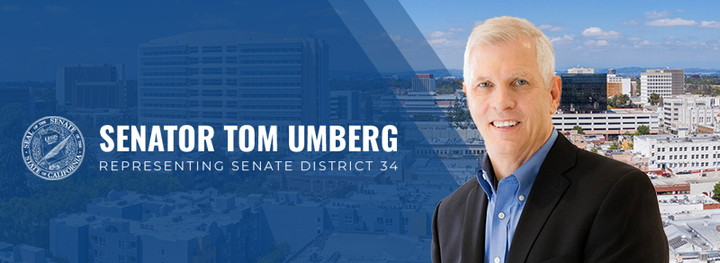
"When the president says he's going to interfere in our elections, when the president or his accolades say he may run for a third term, I believe him," state Sen. Tom Umberg, a Democrat from Santa Ana, said Thursday morning at his "Hands off Our Elections" press conference.
Umberg is the co-author of two bills that supporters describe as safeguards against potential federal actions affecting California elections.
SB46 would allow California officials to remove "constitutionally ineligible candidates" from the state's ballot. Umberg said the proposal was drafted with the potential of a third Trump presidency in mind. Despite the two-term limit on presidents, Trump has floated the idea of a third term multiple times. ABC10 asked the White House multiple times on Thursday if it was still on the table but did not receive a direct response.
"You may not appear on the California ballot," Umberg said. "And I know that seems obvious to everyone, but apparently it's not obvious to our president and his accolades."
A second proposal, SB884, would prohibit federal agents and immigration officials (including agents with U.S. Immigration and Customs Enforcement) from being near California polling places, county elections offices, drop-off boxes and any other elections-related locations like where ballots are counted/recounted, canvassed, audited or certified.
It would be a temporary bill, in place during the remainder of Trump's presidency.
The bill would also increase the number of ballot drop-off locations in all 58 counties, mandate the drop boxes be open for 30 days before the election, allow polling places to remain open later if voting is disrupted and extend the deadline for receiving ballots postmarked by Election Day from the current seven days to 10 days.
"California's elections belong to California voters," said Dora Rose of the League of Women Voters of California.
Supporters argue the measures build on California's efforts to expand voting access.
"Bill by bill, we have created one of the most open and accessible voting systems in the world," Rose said.
The proposals arrive as California remains a frequent target of criticism from Trump and other Republicans, who argue the state's voting procedures undermine confidence in election results.
Last week, Trump alleged Democrats were stealing the primary election and criticized California's vote-by-mail system. State election officials, including Secretary of State Shirley Weber, have repeatedly said the state's longer vote-counting process does not indicate fraud or inaccuracy.
In fact, they note, the state's slower count is largely the result of policies like allowing every registered voter to receive a mail ballot, which they say requires additional, often lengthier verification procedures before votes are finalized.
"But a slow count is not a sign that something's wrong," Rose said. "In fact, it's a sign that things are going the right way."
Republicans have criticized the proposed legislation as unnecessary and politically motivated.
Assemblymember Carl DeMaio, a Republican from San Diego, called the proposals a distraction from broader concerns about California's election system.
"It's so bad that even the left-leaning New York Times this week editorialized saying that California's elections are a disaster," DeMaio said.
The New York Times recently published an editorial arguing California's election system is undermining public confidence in government because of lengthy vote counts.
"The only way to fix that is to clean up our voter rolls, verify citizenship and require voter ID," DeMaio said.
DeMaio is behind the voter ID initiative, which has qualified to appear in front of voters on the November 2026 ballot. If passed, California voters would be required to present either a government-issued ID or the last 4 digits of a government-issued ID number before voting.
The latest proposals follow election legislation signed ahead of the June primary by Gov. Gavin Newsom. Ahead of the June primary election, Newsom approved a bill co-authored by Umberg that prohibits the unauthorized seizure of ballots and restricts unauthorized access to election equipment and materials.
The election bills announced Thursday would require legislative approval before reaching the governor's desk.
Meantime, President Trump has been pushing for the SAVE Act, the federal version of boosting voter identification.
When asked about Umberg's proposed bills, as well as the president's repeated accusations of fraudulent elections in California, White House spokesperson Abigail Jackson responded, “Countless Americans share the same concerns as President Trump watching the way California conducts its elections, including taking weeks to deliver results. The President is committed to ensuring that Americans have full confidence in the administration of our elections. This campaign pledge from the President is why millions of Americans sent him back to the White House and the entire Administration will continue lawfully implementing this agenda. The President has also urged Congress to pass the SAVE America Act and other legislative proposals that would establish a uniform standard of photo ID for voting, prohibit no-excuse mail-in voting, and end the practice of ballot harvesting to secure our elections for generations to come.”
Gov. Newsom himself has called on counties to expedite the ballot counting process, acknowledging the longer the voting count takes, the more mis- and disinformation spreads, and adding that administering elections has reached "a breaking point."
However, the governor did not direct any additional resources to help counties be able to administer such a request. Newsom did, however, note additional funding would be set aside for this purpose in his final budget, set to be released in the last week of June.
As of Thursday afternoon, according to spokesperson H.D. Palmer of Newsom's Department of Finance, while discussions between the Legislature and Newsom are ongoing on the final budget, there's no agreement on a final plan, including resources for local election officials.
Read more: ABC 10